Frame Hangers & Sawtooth Hook Templates: Precision Crafting Assets
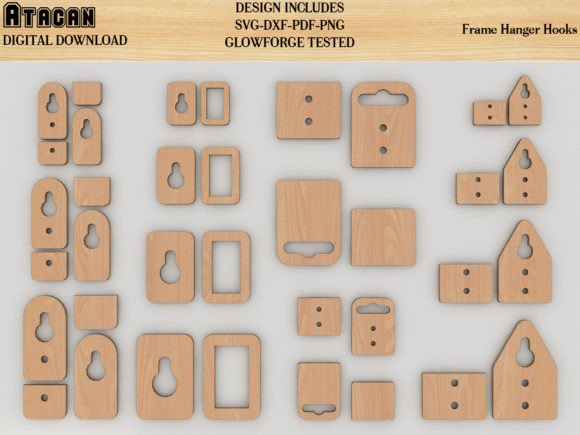
Every designer knows the frustration of a crooked frame or the hassle of measuring hanging hardware by hand. It’s the small details that often derail a project timeline. If you work with a Glowforge, Cricut, or similar cutting machine, you understand that precision is the currency of quality. This is where the Frame Hangers and Sawtooth Hook Templates come into play. These are not just generic shapes; they are meticulously calibrated vector files designed to solve a specific, recurring problem in the crafting and production world: installing frame hardware perfectly every time.
The Anatomy of Precision: Visual Style and Design
At first glance, a template might seem like a simple utility, but the design of these sawtooth hook guides speaks to a "utilitarian aesthetic." The visual style is defined by clean lines, exact geometry, and a lack of unnecessary ornamentation. These files are built with modern typography and vector precision in mind, ensuring that whether you scale them up for a large gallery frame or down for a miniature shadow box, the integrity of the shape remains intact. The personality of this asset is reliability. It doesn't need to be flashy; it needs to be mathematically correct.
The appeal lies in the "set it and forget it" nature of the design. When you load a DXF or SVG file into your machine software, you are looking at a template that has been stress-tested. The visual characteristics include centering marks, alignment lines, and standardized spacing for common hardware sizes. This is modern typography applied to physical tools—clean, sans-serif logic applied to the art of framing. For the maker who values a minimalist, professional workflow, these templates offer a visual language of order and efficiency.
Beyond the Glowforge: Cross-Platform Versatility
While these assets are optimized for the Glowforge ecosystem, tested specifically on the Pro model, their utility extends far beyond a single machine. The digital design world is fragmented, and compatibility is king. These templates were built to be the "universal translator" of the cutting world. Because the package includes SVG, DXF, PDF, AI, and CDR files, they function seamlessly across a massive range of hardware and software.
If you are running a Cricut Maker, a Silhouette Cameo, a Brother ScanNCut, or even a Sizzix machine, you can import these files directly. This is particularly vital for small business owners who might switch equipment or outsource production. The vector files ensure that the lines remain sharp, whether you are cutting cardstock for a paper craft project or etching into acrylic for a custom signage order. Even for those using the files for digital planning or print-and-cut stickers, the JPG files included serve as high-quality references. This versatility transforms the templates from a simple tool into a core component of a scalable production line.
Strategic Application: Brand Identity and Workflow
How does a sawtooth hook template influence brand perception? It comes down to consistency. If you are selling physical art, photography, or custom signage, the presentation is part of the product. A frame that hangs crookedly or hardware that is off-center can cheapen a premium item. By using a design asset like this, you enforce a standard of professionalism that customers notice, even if they can't articulate it. It contributes to a brand identity rooted in craftsmanship and attention to detail.
From a workflow perspective, these templates are a massive time-saver. In the world of packaging design and production, time is money. Instead of manually marking the back of every frame, you can create a jig or a stencil using your laser or paper cutting machine. This ensures that every single piece in a batch has the hardware placed in the exact same spot. This level of consistency is crucial for editorial design setups or gallery walls where alignment is everything. It allows you to scale your hobby into a business, or your business into an empire, without sacrificing quality control.
Practical Guidance for Makers and Designers
When integrating these templates into your library, think of them as a foundational design asset. Here is how to get the most out of them:
- Material Testing: While the files are vector-perfect, your material matters. Test the templates on scrap cardstock or cheap plywood first to dial in your machine's kerf and power settings before using premium materials.
- Font Pairing for Branding: If you are using these templates to create branded merchandise (like custom-framed prints), consider the font pairing on your labels. The clean, industrial look of the hardware templates pairs well with a modern sans serif font for a contemporary feel, or a classic serif font for a more traditional art gallery vibe.
- File Management: Keep the AI and CDR files accessible if you need to edit the paths in Adobe Illustrator or CorelDRAW. Perhaps you need to add a logo etch to the template itself. The editable nature of these files makes them flexible for custom client requests.
Ultimately, these Frame Hangers and Sawtooth Hook Templates are more than just lines on a screen. They are a bridge between digital design and physical reality. For the entrepreneur, the crafter, or the designer, they remove the guesswork from the final stage of production, ensuring that your work is presented exactly as it was intended: perfectly.